
System selection
Roof waterproofing: complete removal or a Polyurea overlay? A suitability guide
A roof can look intact while the layers beneath it are unreliable. Start by identifying what can safely remain, rather than choosing the most appealing material name.
Direct answer
Assess whether the existing layers and substrate can reliably remain. Widespread debonding, underlying failure or substantial drainage and junction reconstruction may justify full removal. An overlay should be considered only where retained layers are sound, moisture and compatibility meet the specified system requirements, and drainage and terminations can be resolved. No full removal does not mean no preparation: cleaning, repairs, primer and detail work still matter. Photographs alone cannot decide the system.
Editorial record
Published2026-09-14
Updated2026-09-14
Content ownerProficient Waterproofing & Engineering Ltd.
This decision and record-keeping guide does not replace a site survey, specified system documents, structural assessment or contract. Illustrations are not construction drawings; photographs are not evidence of a passed test.
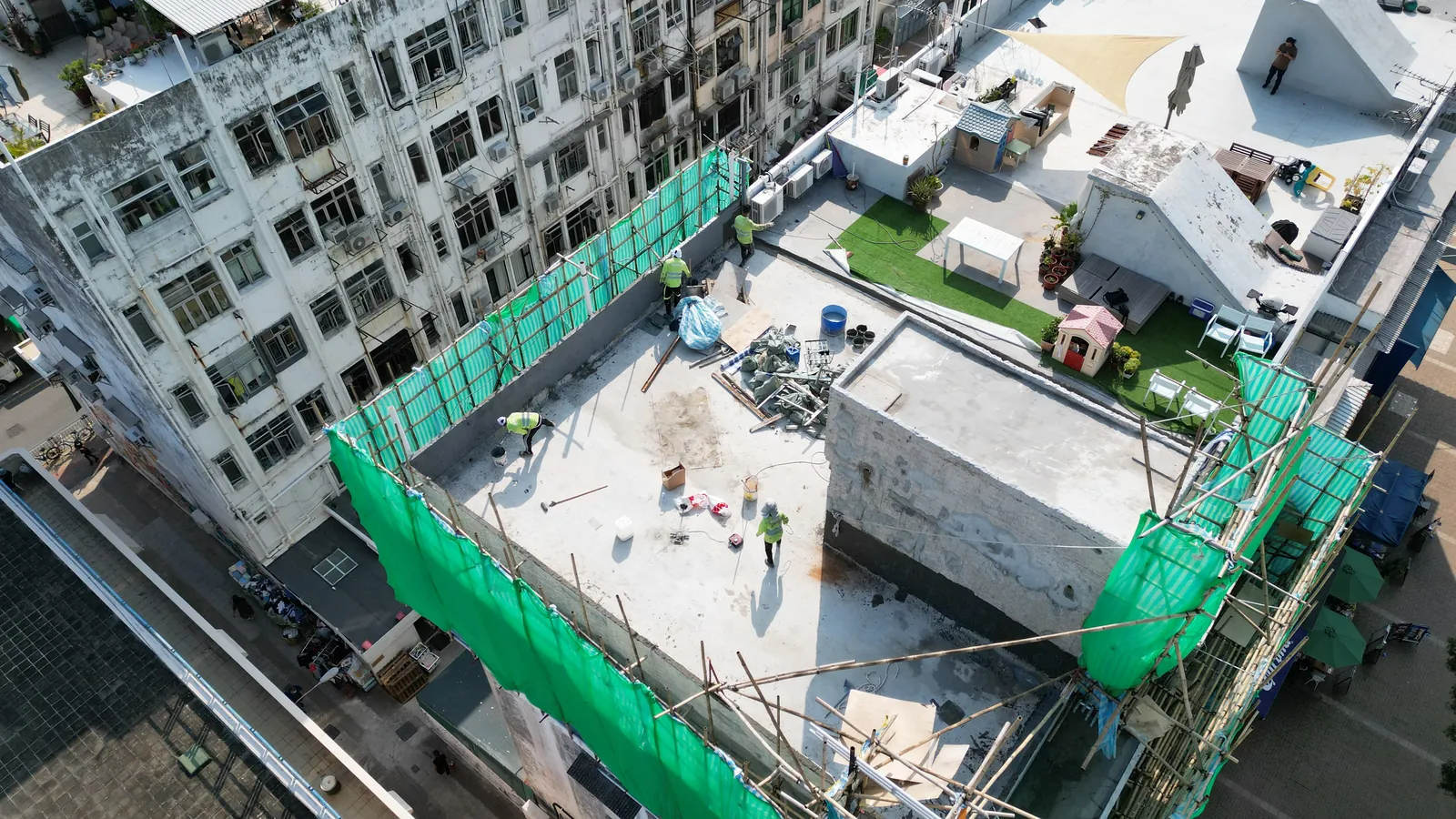
System assessment
Check six site conditions before choosing the scope.
01
Existing layers: isolated damage or widespread debonding?
Map blisters, lifted edges, peeling and previous patches together. Arrange investigation or adhesion testing where necessary; a firm surface does not establish the condition of the layers below.
Suggested recordCondition map, existing material information, investigation points and results
02
Substrate: unresolved moisture or weak material?
Identify moisture sources and assess the substrate using the selected system's methods. A limit from one brand must not be applied to another; a sun-dried surface does not prove the build-up is dry.
Suggested recordMethod, location, date, readings and specified requirements
03
Drainage: will coating address the actual ponding cause?
Distinguish blockage, local low spots and general falls. A waterproof membrane is not a falls-forming layer; include any required substrate and outlet work in the scope.
Suggested recordRain observations, low-point map, outlet positions and proposed repairs
04
Details: can edges and penetrations be connected continuously?
Check old-to-new interfaces, upstand terminations and equipment fixings. An accessible main roof area does not guarantee adequate working space or sound perimeter junctions.
Suggested recordClose-ups, detail drawings and obstructed locations
05
Materials: a complete system or only a coating name?
Identify the product, primer, detail treatment, membrane and required finish. Unknown existing coatings need a compatibility assessment and an agreed trial or investigation where appropriate.
Suggested recordData-sheet version, specified build-up and compatibility record
06
Programme: how will the work affect occupants?
Compare access, waste, noise, masking, weather windows, equipment relocation and phased handover. An overlay may reduce demolition but cannot guarantee the same short programme at every site.
Suggested recordScope schedule, access plan, rain contingency and reinstatement list
Repair decision
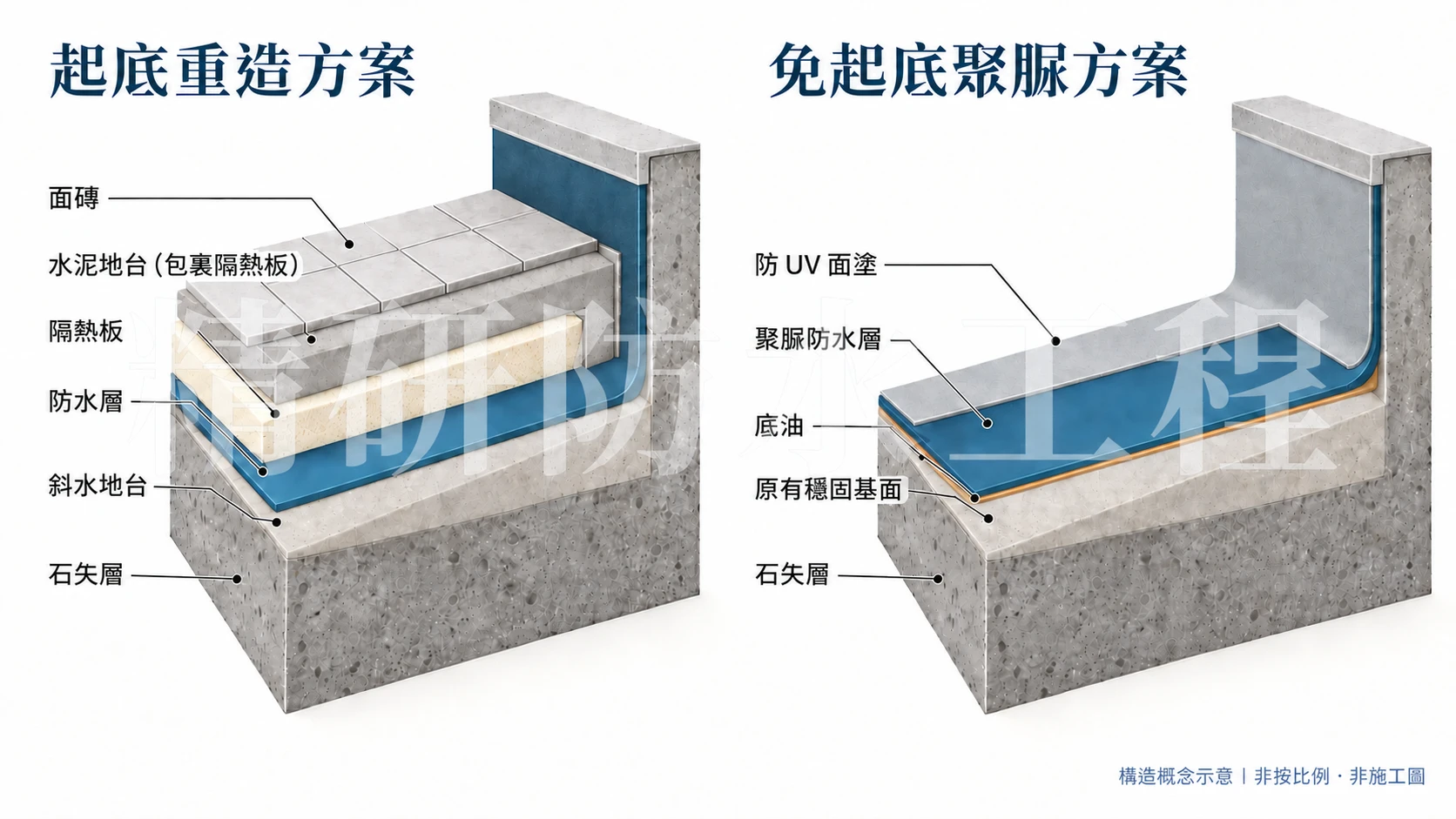
Choose complete reconstruction or a Polyurea overlay from the site conditions.
Use the same two system directions as the home page, checking the existing layers, substrate, moisture and drainage before defining the works.
01 / Full removal
Complete removal and reconstruction of the roof waterproofing system
A high-rise duplex project showing removal of the existing build-up, substrate preparation and the scale of a complete waterproofing reconstruction.
View suitability and limitations
- More suitable when
- The existing waterproofing has widespread failure, debonding or peeling; the substrate needs repair; or drainage falls and junction details must be rebuilt.
- Confirm before work
- Removal limits, substrate repairs, drainage falls, waterproofing build-up, protection or reinstatement, and coordination with rooftop equipment and other trades.
- Main limitation
- The scope and programme are larger. The quotation should clearly state removal, waste disposal, reinstatement, testing and exclusions.
02 / Overlay system
Seamless Polyurea spray system without full removal
Project footage from residential roofs, petrol stations and basements illustrating Polyurea overlay applications. Suitability still depends on substrate, moisture, drainage and existing-layer conditions.
View suitability and limitations
- More suitable when
- The substrate and most of the existing system remain stable, allowing a continuous waterproofing surface to be formed after cleaning, repairs and reinforcement of details.
- Confirm before work
- Adhesion of the existing layers, substrate moisture, material compatibility, drainage falls and termination details.
- Main limitation
- A new coating must not be used to conceal debonding, trapped moisture or unresolved drainage defects.
Read the work, not just the finished surface
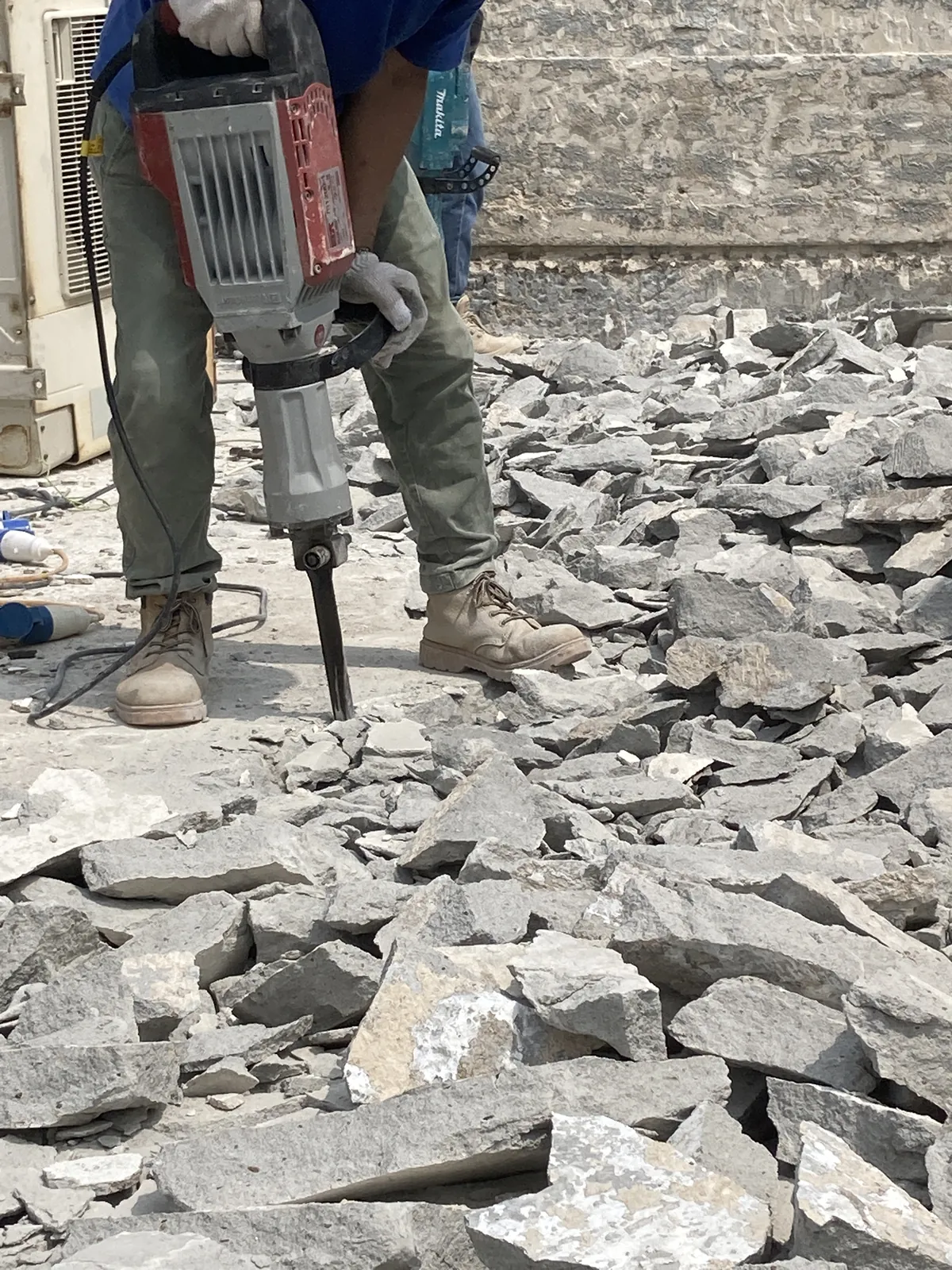
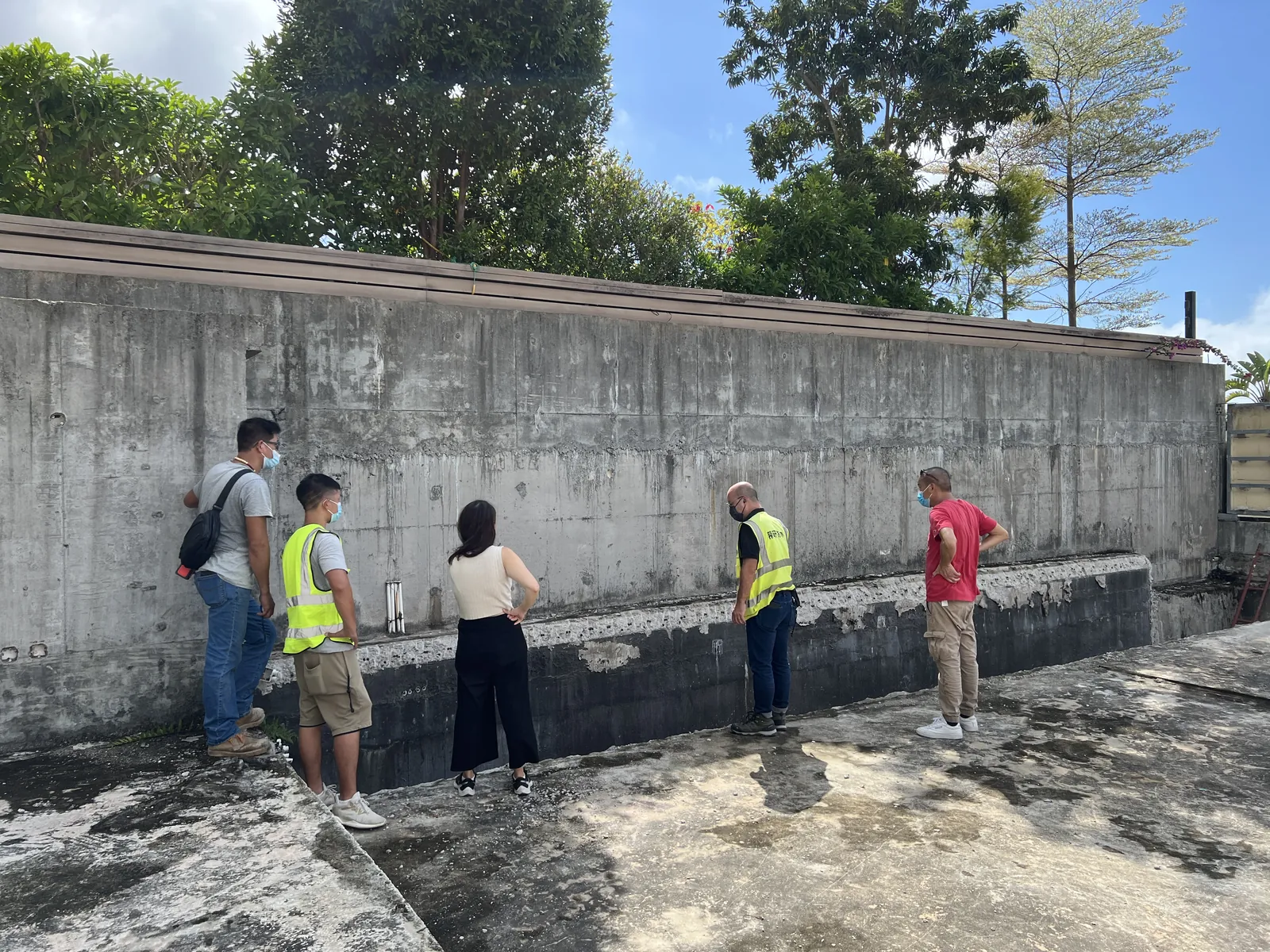
Removal stage | The photograph shows demolition, not the depth or contractual limits of removal. Define what stays and what is removed in the scope.
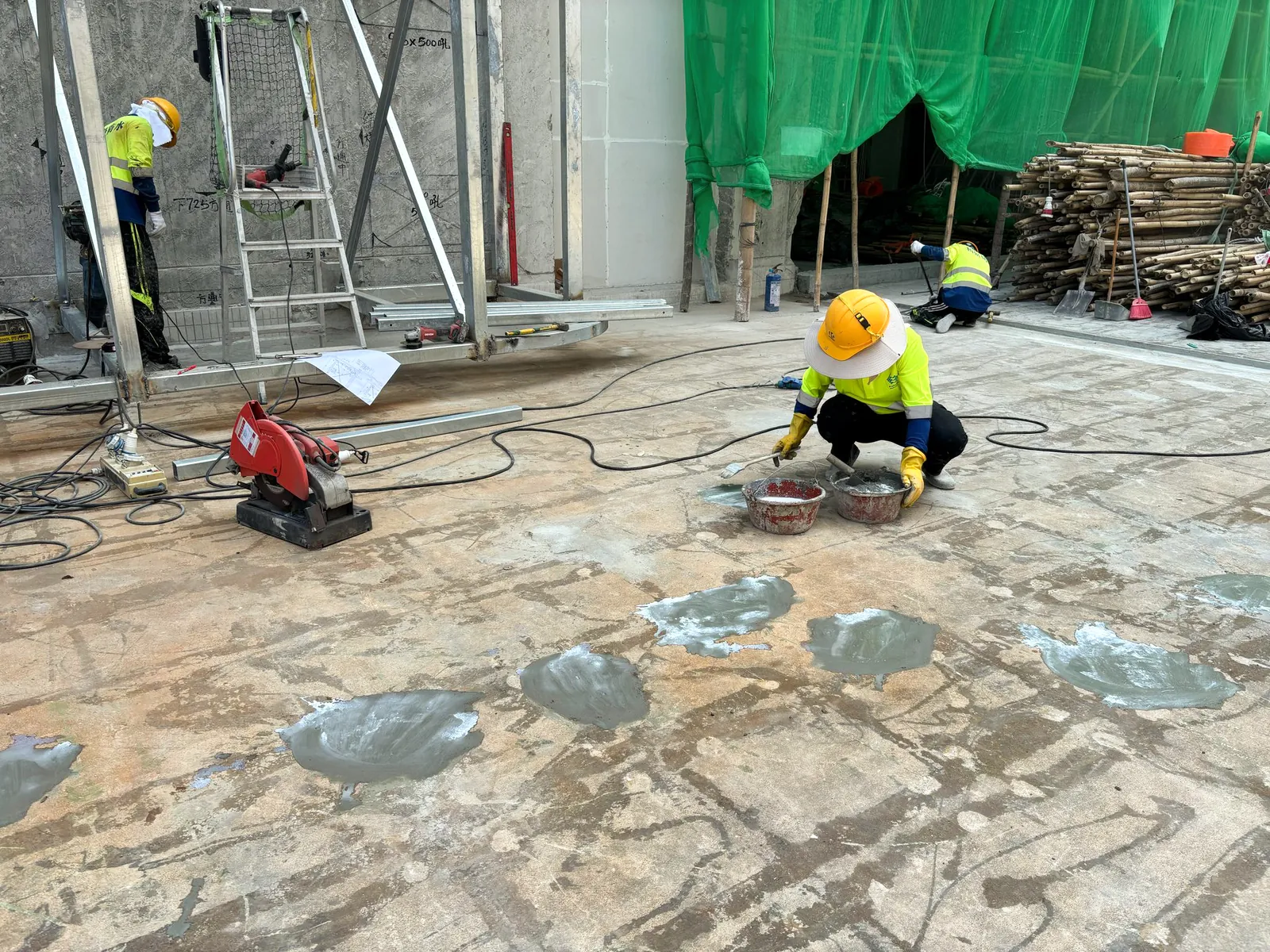
Preparation | A different project illustrating a work stage, not the same site as the preceding photograph. It does not prove moisture or pull-off compliance.
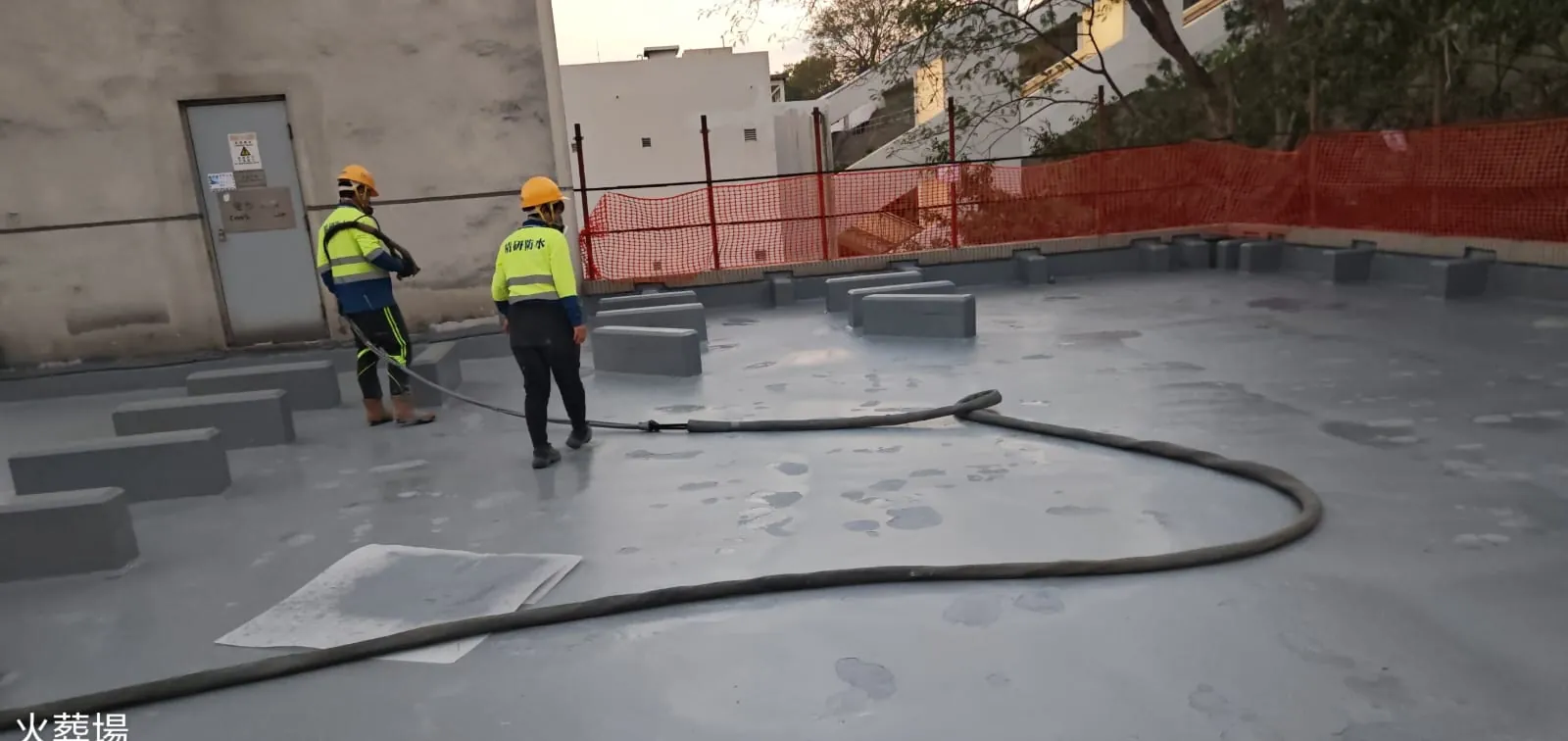
Spray application | An illustration of roof-area application. Product identity, membrane thickness and retained layers require the specific project records.
Further guidance
Open the details needed for further assessment and enquiry preparation.
Decision boundary
Removal describes scope; Polyurea describes a material system.
Full removal describes demolition, substrate repair and reconstruction. Polyurea is a material category and can also be considered after full removal. First compare what is retained, then compare the specified systems.
This page explains the site's two common service directions, not every possible solution. Roof age alone cannot determine which is appropriate.
- 01Which layer will be exposed, and which layers remain?
- 02How will the substrate, drainage and junctions be treated?
- 03What inspection and warranty conditions apply?
Official guidance
What can the Buildings Department guidance establish?
The Building Maintenance Guidebook separates replacement of aged roof waterproofing, limitations of partial repair and workmanship. It supports investigating the failure area before choosing a method, rather than indiscriminately adding another coat.
It is not a specification for a particular Polyurea product or proof that this roof must be stripped. The six checks here are editorial prompts for an informed survey.
Source: [1] Buildings Department: Building Maintenance Guidebook, 4.1.3(a), printed pages 92–94
Manufacturer evidence
An overlay still needs preparation and a specified system.
For example, Sikalastic-841 ST identifies concrete-system primers and spray-membrane application information. Sikalastic-702 is a different hybrid-Polyurea liquid-applied system with its own application and curing conditions. These are reasons to identify the actual product, not treat all Polyurea systems as interchangeable.
The examples do not establish which products were used in the archive photographs. Confirm thickness, moisture limits, environment, overcoating and finish against the current documents agreed for the project.
Source: [2] Sika Hong Kong: Sikalastic®-841 ST manufacturer information[3] Sika Hong Kong: Sikalastic-702 product information
- 01Is the complete product/system identified?
- 02Is the existing substrate suitable?
- 03How will unknown coatings be assessed?
- 04What happens after rain or an interrupted application?
Quotation preparation
Turn the comparison into an accountable quotation scope.
Give contractors the same area, condition photographs and access constraints. Compare removal, repairs, drainage, details, protection, reinstatement and handover individually; similar totals can conceal different scopes.
Organise quotations into included, excluded and subject to survey. Where concealed conditions are uncertain, agree how investigation results and changes will be confirmed.
- 01Overall views, approximate area and repair history
- 02Outlets, parapets, thresholds and equipment close-ups
- 03Leakage timing, ponding and access constraints
- 04Required records, testing, warranty and reinstatement
Project evidence
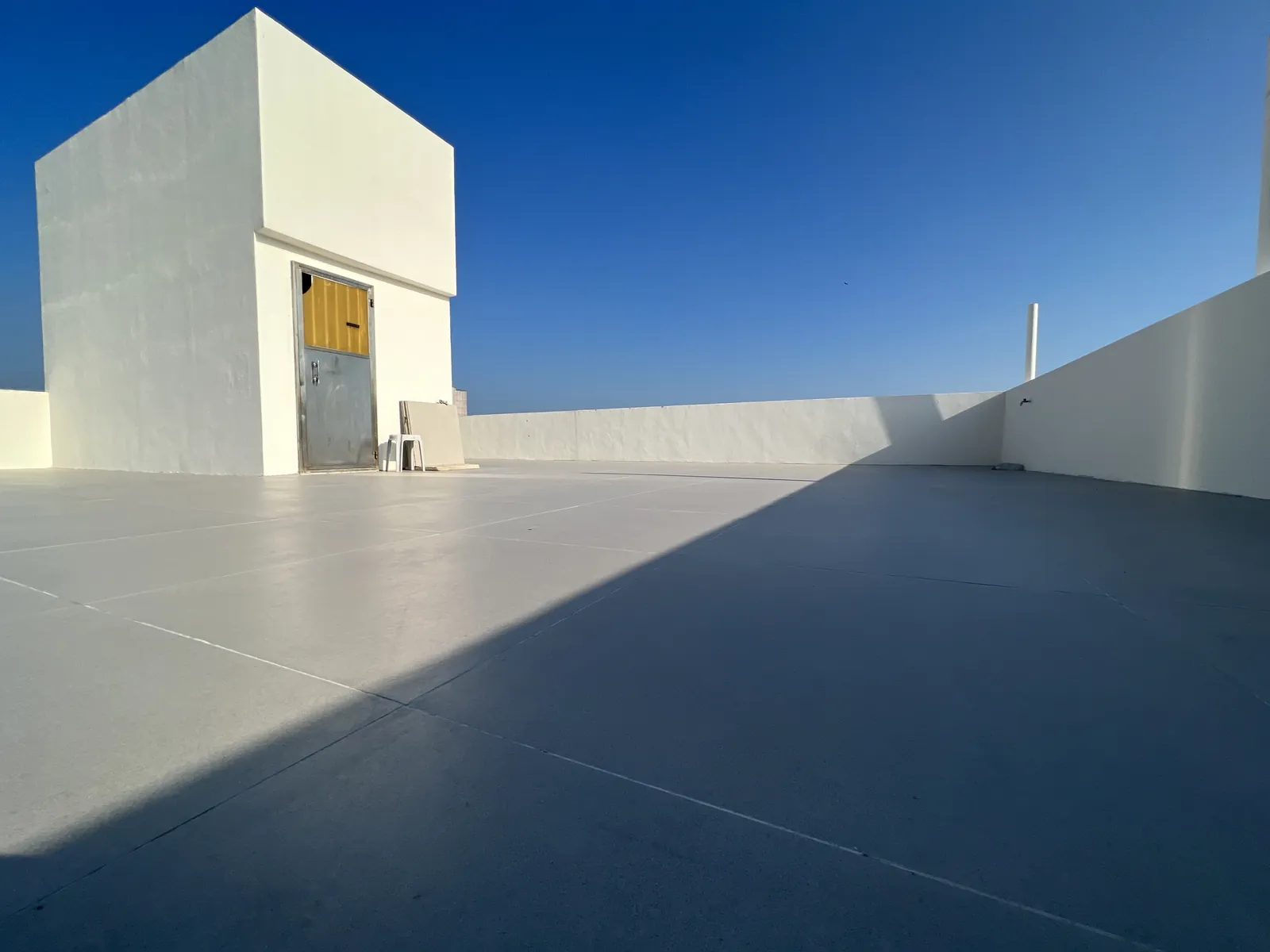
Related residential project records
Related reading
Related roof waterproofing articles
How to inspect roof waterproofing: site records, details and handover checklist
A Hong Kong roof waterproofing handover guide for owners and property managers: concealed-work photos, material records, detail checks, appropriate tests, remedial rechecks and written warranty documents.
How to assess roof ponding: falls, outlets and waterproofing checks
A roof ponding guide covering recession time, drainage outlets, falls, wall junctions, cracks, equipment bases and existing waterproofing before defining the work scope.
Village house roof leakage: 7 places to inspect after rain
A Hong Kong village-house roof leakage guide covering seven inspection points, photo records and the choice between complete reconstruction and a Polyurea overlay.
FAQ
Frequently asked questions
Can every roof without visible peeling receive an overlay?+
No. Check adhesion below the surface, moisture, compatibility and junctions. Investigation or a trial may be needed.
Can Polyurea be used after full removal?+
It can be assessed. Removal is the scope; Polyurea is a material category. Select the complete system after confirming the prepared substrate and intended use.
Will a Polyurea membrane fix ponding?+
Do not assume so. Check outlets, falls and low spots, and define any drainage or falls correction alongside the waterproofing.
Is an overlay always cheaper and finished in one day?+
No. Reduced demolition does not eliminate repairs, moisture management, masking, weather and details. Spray time is not the whole programme.
Can photographs settle the choice immediately?+
They help initial triage and survey planning. Concealed layers, moisture and adhesion still require site confirmation where uncertain.
Source record
Sources and further guidance
- 01Buildings Department: Building Maintenance Guidebook, 4.1.3(a), printed pages 92–94
Official roof-maintenance principles, workmanship, testing and written warranties. General guidance, not a project design or endorsement of a contractor. Accessed 11 September 2026.
- 02Sika Hong Kong: Sikalastic®-841 ST manufacturer information
A spray-applied Polyurea product example with specified concrete-system primers, application conditions and curing information. Requirements do not apply to every Polyurea system; the photographs do not establish use of this product. Accessed 11 September 2026.
- 03Sika Hong Kong: Sikalastic-702 product information
A different hybrid Polyurea liquid-applied system illustrating product-specific moisture, dew-point, overcoating and curing requirements. Not an alternative specification for a sprayed system. Accessed 11 September 2026.
Residential enquiry
Unsure which layers of your roof can remain?
Send an overall roof view, close-ups of the existing surface and outlets, approximate area and repair history. The team can organise the questions that need a site survey.