
Inspection and handover
How to inspect roof waterproofing: site records, details and handover checklist
A tidy finished roof shows a completed surface, not the hidden work. Useful handover evidence combines traceable site records, agreed test results and clearly stated warranty coverage.
Direct answer
Inspect against the agreed scope: substrate and concealed-work photographs, specified materials and application records, outlets and wall junctions, site-appropriate test results, remedial rechecks and a written warranty. A neat finish or a short period without stains does not alone establish system compliance. Agree inspection stages before work starts, while the relevant layers are still visible.
Editorial record
Published2026-09-14
Updated2026-09-14
Content ownerProficient Waterproofing & Engineering Ltd.
This decision and record-keeping guide does not replace a site survey, specified system documents, structural assessment or contract. Illustrations are not construction drawings; photographs are not evidence of a passed test.
Handover checklist
Agree the evidence before work starts; check eight records at handover.
01
Agreed scope and changes
Check roof areas, edges, removal and retention, protection, reinstatement and exclusions. Keep the confirmed updated version when the scope changes.
Suggested recordScope drawing, quotation attachments, change log and versions
02
Before-work condition record
Keep consistent overall views and close-ups of outlets, thresholds, equipment and pre-existing defects, to distinguish the initial condition from later changes.
Suggested recordDated photographs and a location plan
03
Substrate and details before concealment
Record work before primer, membrane or protection covers it, including agreed inspections. Missing records should remain unverified rather than being marked compliant.
Suggested recordPreparation, repairs, wall junctions, penetrations and terminations
04
Materials and application conditions
Identify the product, batch and applicable document version. Keep the environmental, substrate and application records required by that system, not just a photograph of the container.
Suggested recordMaterial schedule, batch references, data sheets and site diary
05
Continuity and specified thickness
Look for omissions, damage, unusual blistering and disconnected details. Agree how thickness will be checked; overall consumption alone cannot prove local thickness everywhere.
Suggested recordArea usage, agreed measurement method, locations and results
06
Appropriate tests and rechecks
Confirm methods, coverage, acceptance criteria, curing and safety arrangements before testing. Retain results and remedial rechecks, not just a statement that water testing occurred.
Suggested recordTest plan, conditions, results and defect closure records
07
Completion, drainage and reinstatement
Check outlets, equipment fixings and possible damage from subsequent trades against the agreed scope. Record outstanding items even when the main surface looks neat.
Suggested recordCompletion views, details, reinstatement and outstanding work
08
Written warranty and maintenance
Check the provider, dates, coverage, exclusions, reporting route and obligations. Confirm the effect of later installations before penetrating or altering the system.
Suggested recordWarranty, covered-area plan, contacts and maintenance instructions
Read the work, not just the finished surface
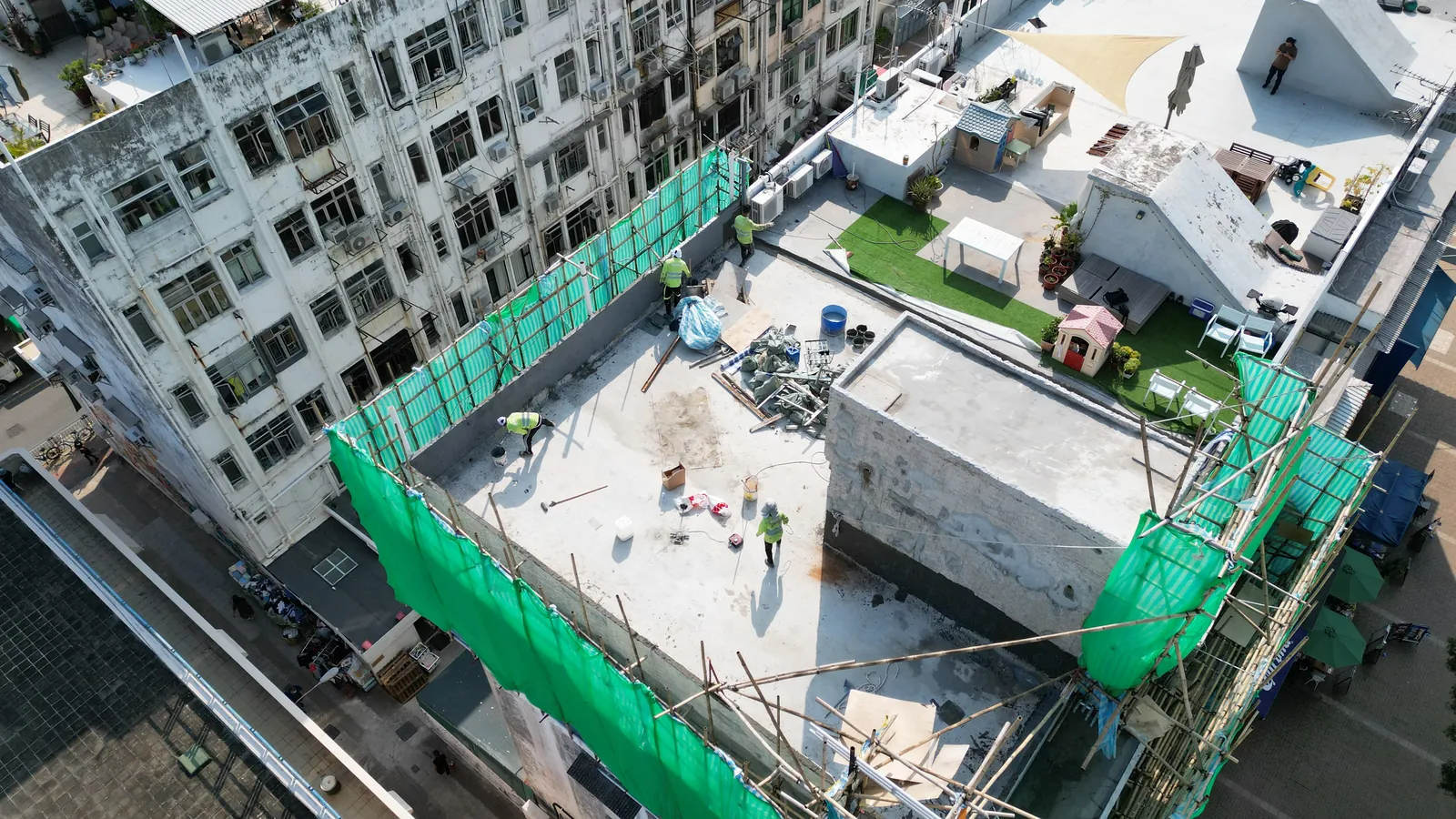
During work | Locate the overall working area first, then index detail photographs to the same plan.
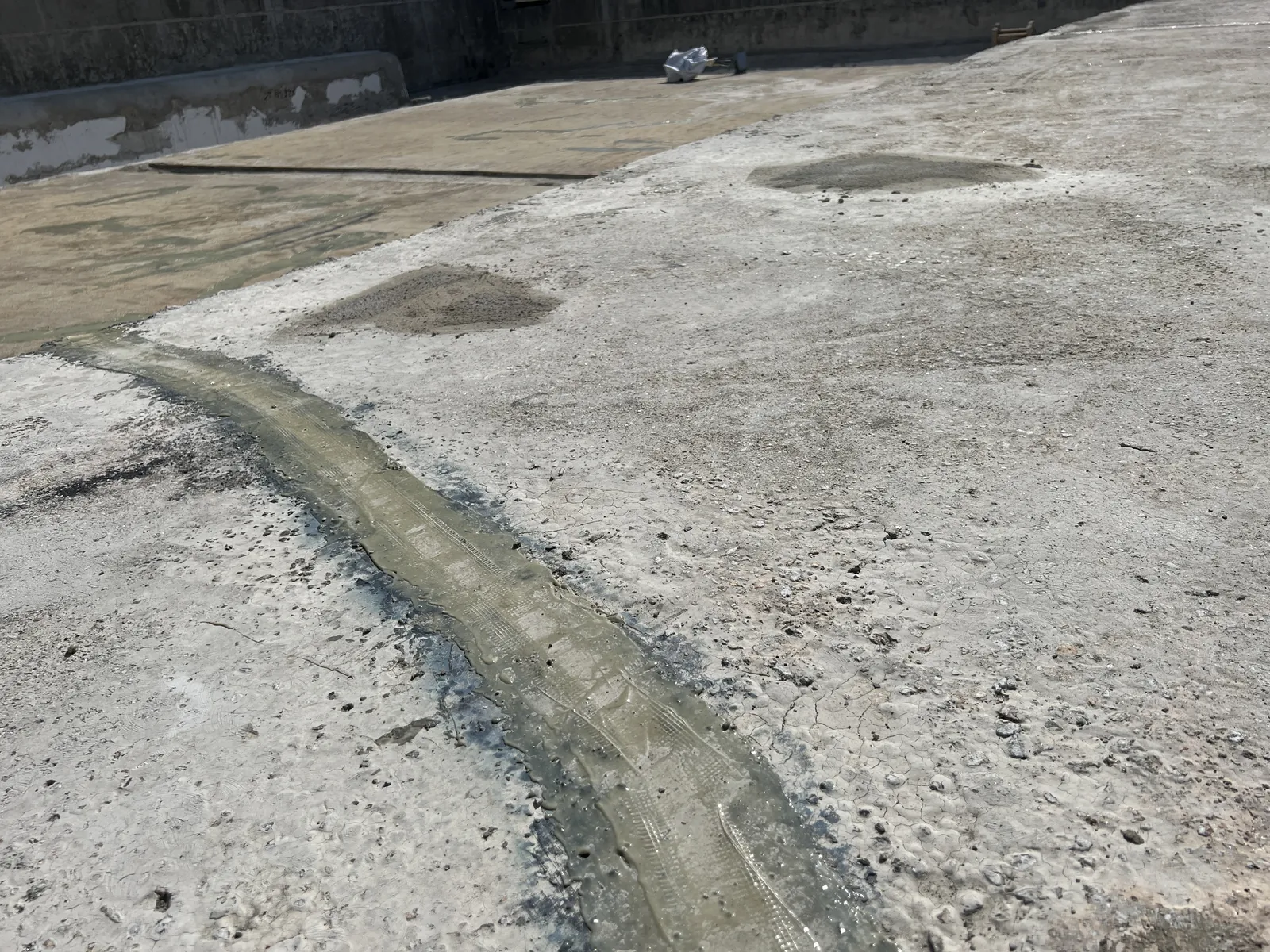
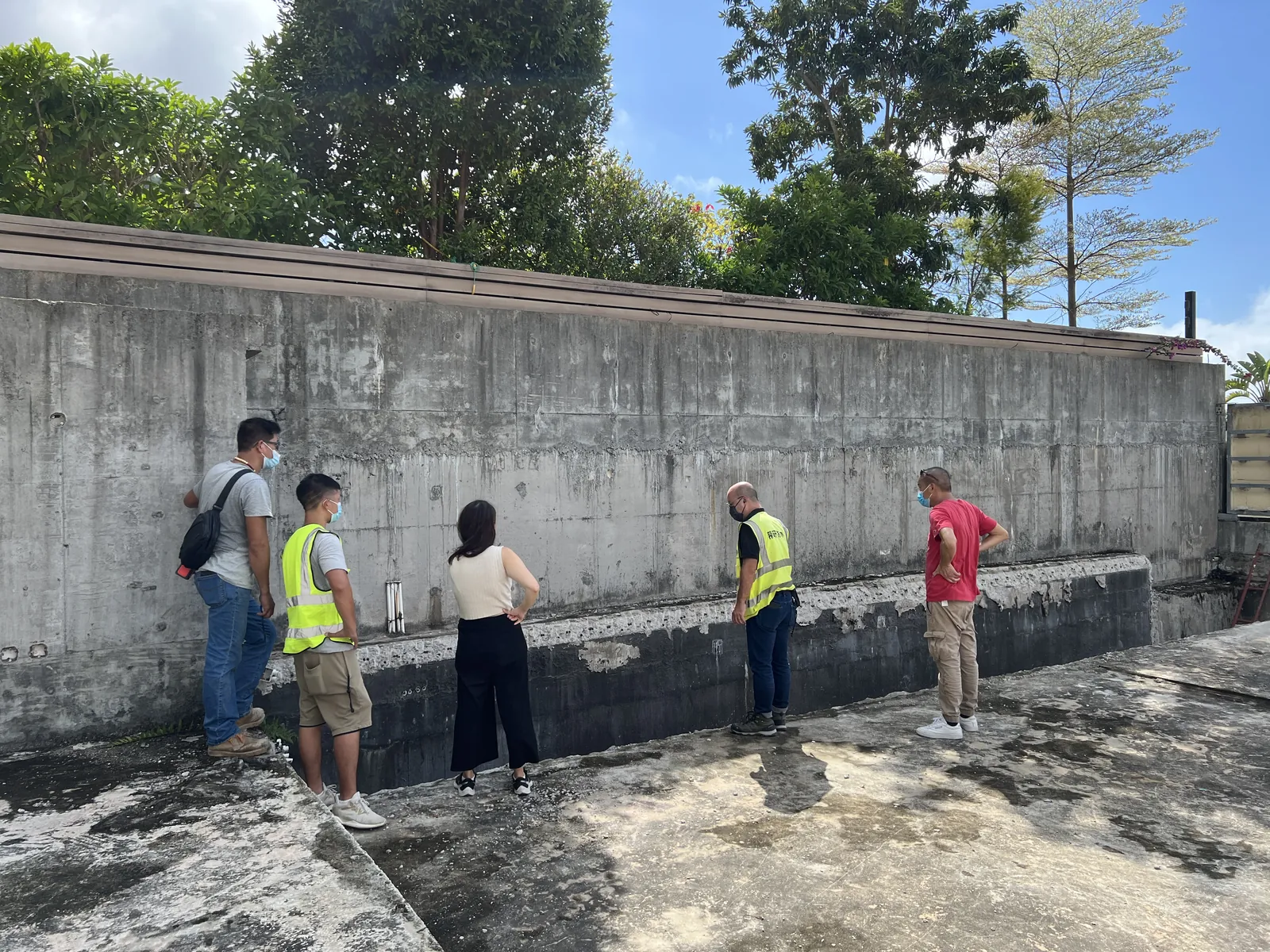
Detail record | A different project showing a local treatment. Include date, location and work-stage notes; do not infer the cause or success of a repair from this photograph.
Local roof treatment: photo observations
The photograph shows a linear treatment band and the adjacent roof substrate. It does not establish whether the underlying condition was a crack, a joint or something else.
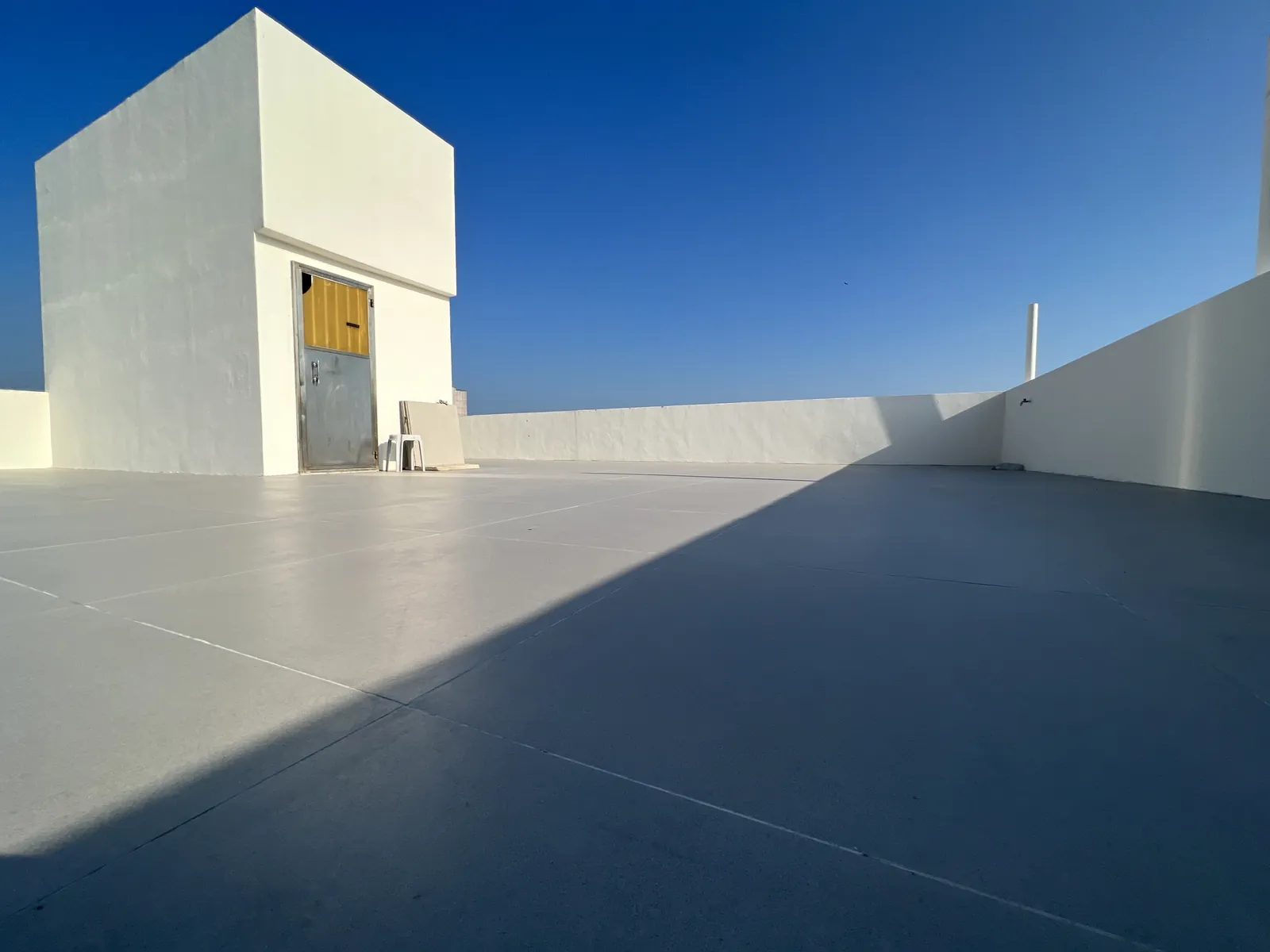
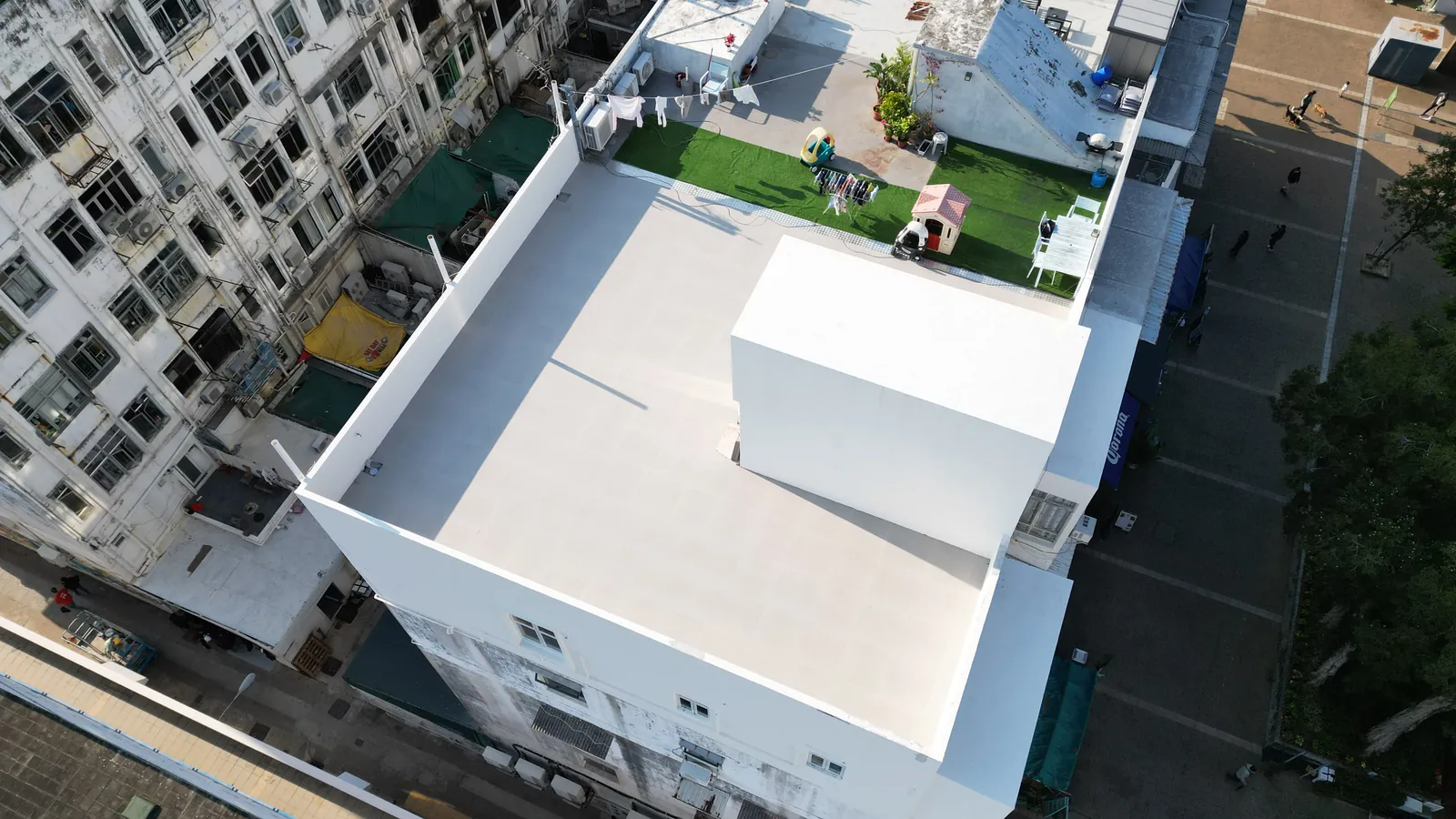
Completion | Include thresholds, wall junctions and the main surface in the record. Check application and test documentation separately.
Further guidance
Open the details needed for further assessment and enquiry preparation.
Hold points
Inspection begins before the completion visit.
Agree what must be photographed, witnessed or acknowledged, and by whom. The objective is traceability to a location, date and work stage rather than the largest possible photo folder.
Useful stages include prepared substrate, membrane details before concealment, and completed testing and reinstatement. Confirm actual hold points in the project documents; this guide does not impose a universal inspection standard.
- 01Before: condition, scope and existing defects
- 02During: preparation, materials, hidden details and agreed tests
- 03Handover: completion, rechecks, warranty and maintenance
Evidence boundary
What do photographs establish—and what remains unverified?
A photograph records visible conditions at a moment in time. It does not independently prove dry underlying layers, compliant thickness, adhesion or long-term watertightness. Read it alongside application records and agreed tests.
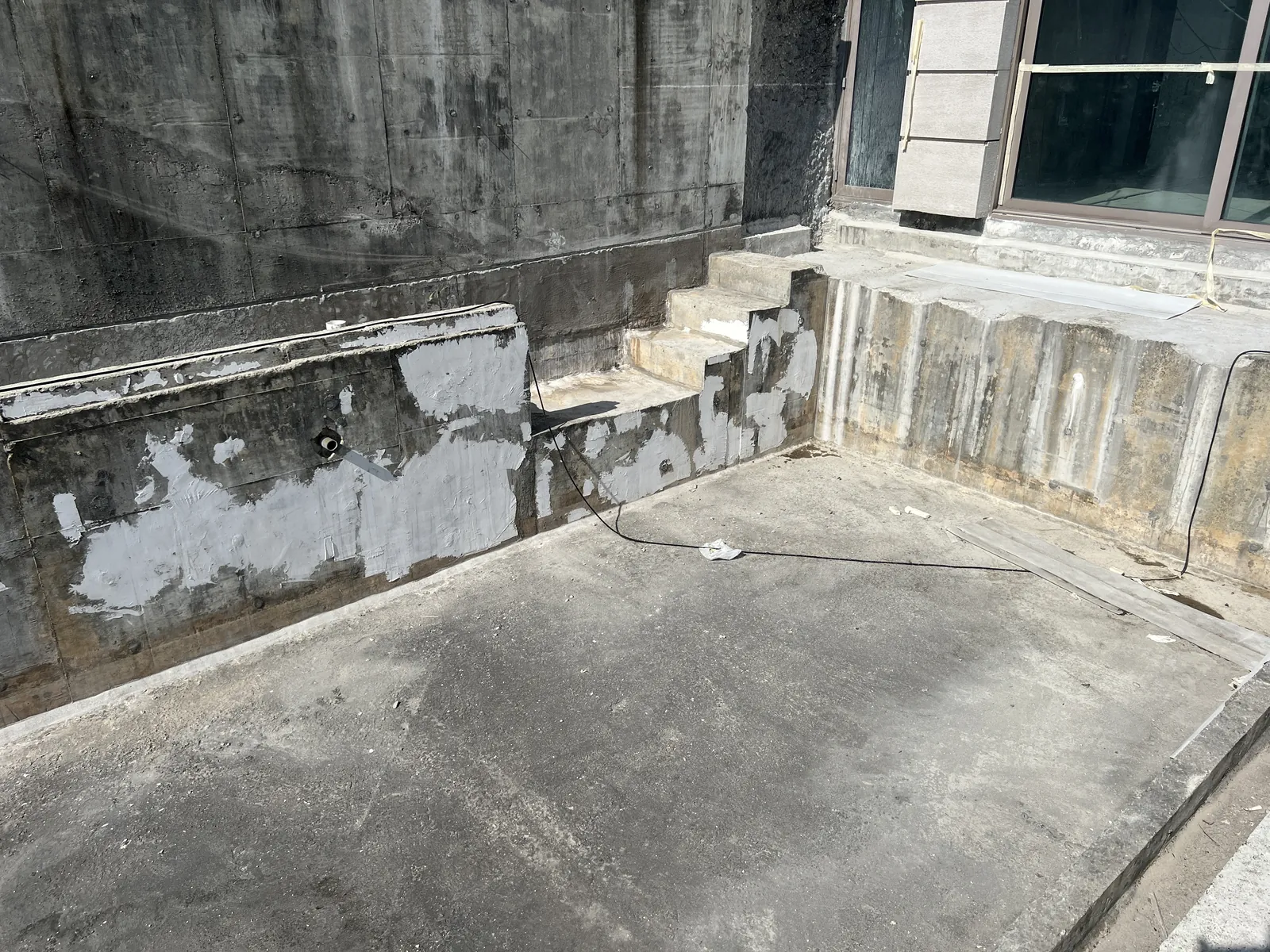
Matched before/during/after views of one location are useful. Illustrations from different projects must be identified, never combined into a fabricated case history. The photographs on this page follow that distinction.
- 01Unknown location: add a plan reference
- 02Only finished views: request concealed-work records
- 03Passed-test claim: check method, results and rechecks
- 04Only containers: check product, work area and application records
Testing and safety
Does every roof need the same ponding test?
No universal water depth or duration is specified here. Consider structural capacity, drainage and overflow, thresholds, occupants, curing requirements and the purpose of the test. Have suitable project professionals determine arrangements; owners should not block roof outlets themselves.
The Buildings Department guide discusses ponding and thermal-scanning methods, not a single procedure for every roof. If ponding is unsuitable, document the alternative method's coverage and limitations. One observation without leakage cannot guarantee every future condition.
Source: [1] Buildings Department: Building Maintenance Guidebook, 4.1.3(a), printed pages 92–94
- 01Before testing: method, coverage, curing and safety
- 02During testing: date, location, observations and anomalies
- 03After testing: defects, remediation, rechecks and unresolved limits
Manufacturer requirements
Surface dry is not the same as ready for testing or use.
Manufacturer information can distinguish overcoating, rain exposure, foot traffic and full cure. Sikalastic-702, for example, lists curing information by temperature. Handover should follow the specified system rather than a touch-dry impression.
Do not transfer that product's times to another system. Record rain, interruptions, equipment reinstatement or later work and establish whether further inspection is needed.
Source: [3] Sika Hong Kong: Sikalastic-702 product information
Handover record
Separate confirmed work, missing evidence and remedial work.
A useful checklist records location/item, agreed requirement, evidence file, result, responsible person and completion date. Missing documents do not automatically establish a defect, but the item should not be marked verified.
The Buildings Department guide addresses written material and workmanship warranties. Confirm the actual term, scope, reporting route and obligations in the contract; a brand name or generic warranty period is not a project guarantee.
Source: [1] Buildings Department: Building Maintenance Guidebook, 4.1.3(a), printed pages 92–94
- 01Confirmed: evidence matches the agreed requirement
- 02Evidence pending: work or test documents are missing
- 03Remediation pending: location, issue and owner recorded
- 04Rechecked: result and date added without erasing the original record
Project evidence
Related residential project records
Related reading
Related roof waterproofing articles
Roof waterproofing: complete removal or a Polyurea overlay? A suitability guide
Compare full roof waterproofing reconstruction with a Polyurea overlay in Hong Kong. Check existing layers, substrate moisture, drainage and junctions, with project photos, a conceptual section and primary sources.
Parapet and wall-foot leakage: cracks, terminations and upstands
A parapet leakage inspection guide covering coping joints, cracks, wall-foot corners, waterproofing upstands, fixings, thresholds and previous repairs.
How to assess roof ponding: falls, outlets and waterproofing checks
A roof ponding guide covering recession time, drainage outlets, falls, wall junctions, cracks, equipment bases and existing waterproofing before defining the work scope.
FAQ
Frequently asked questions
Is one rainstorm without leakage enough for acceptance?+
It is useful observation, not a substitute for agreed inspection. Rain, wind and duration vary; check scope, concealed work, details, tests and handover documents.
Do more photographs mean better workmanship?+
Not necessarily. Dated, located work-stage photographs that match records are more useful than many unlabelled completion views.
Should all roofs undergo the same ponding test?+
No. Suitable personnel must establish the method and conditions considering capacity, drainage, curing and site risk. Owners should not block outlets themselves.
Does a long warranty guarantee no future leaks?+
No. Check the actual provider, coverage, obligations, exclusions and maintenance requirements, not just the number of years.
What should property managers retain?+
The agreed scope and changes, condition and work-stage photographs, material and necessary test records, remedial rechecks, written warranty and maintenance contacts. Agree the exact list in the contract.
Source record
Sources and further guidance
- 01Buildings Department: Building Maintenance Guidebook, 4.1.3(a), printed pages 92–94
Official roof-maintenance principles, workmanship, testing and written warranties. General guidance, not a project design or endorsement of a contractor. Accessed 11 September 2026.
- 02Sika Hong Kong: Sikalastic®-841 ST manufacturer information
A spray-applied Polyurea product example with specified concrete-system primers, application conditions and curing information. Requirements do not apply to every Polyurea system; the photographs do not establish use of this product. Accessed 11 September 2026.
- 03Sika Hong Kong: Sikalastic-702 product information
A different hybrid Polyurea liquid-applied system illustrating product-specific moisture, dew-point, overcoating and curing requirements. Not an alternative specification for a sprayed system. Accessed 11 September 2026.
Residential enquiry
Need roof waterproofing with traceable site records and handover?
Share the roof area, condition photographs and required inspection or documentation arrangements so they can be considered during the survey and quotation.